


 In this case study, I’m going to change some names.
GreatDrink is a soft drink manufacturing company based in Athlone and is at a crossroads. The company runs like a well-oiled machine: it operates efficiently and profitably, maintains good long-standing relationships with its customers, and its employees operate comfortably in a time honoured corporate culture. But competitors' products are gaining market share and are especially popular with young adults.
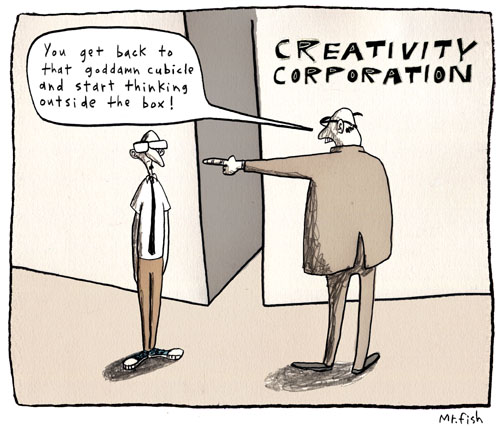
GreatDrink has brought in a brash Dubliner with an MBA to be marketing director. He annoys fellow directors and senior management alike with his unorthodox work style and "outside-the-box" ideas. But he is right in his insistence that the company must either innovate or evaporate. Eventually he leaves GreatDrink for a competitor, where he feels his creative ideas will be better received.
Meg Higginsbottom becomes CEO of GreatDrink in the middle of these developments. She puts in long days, but her work lacks focus: she is uncertain about what to do and increasingly anxious about the company's future - as well as her own.
You are advising the company. What needs to happen?
THE IDEA AT WORK
Five proposals about how to set the stage for employee creativity while respecting GreatDrink 's history. A common theme runs through them all: change can be gradual, but it is the responsibility of the CEO to initiate it and maintain its momentum. Change has to happen from the top down and culture changes have to be driven from CEO level.
Make meaningful change gradually
Change doesn't have to be a wrenching experience: employees who contributed to the company's past success should feel engaged, not threatened. A useful exercise is to ask employees to attend, say, a sporting event where competitors' drinks are sold, and then to return to the office to discuss important findings. Such outside-the-office experiences can help employees develop new ways to create, package, distribute, and market GreatDrink 's juice drinks. Show employees how observe what is going on around them and how to bring them back to the company without fear of being laughed at.
Set aside resources for innovative projects
3M has a "15% Rule," according to which scientists are expected to devote 15% of their time to invention. Such a policy would provide organisational support for employees' intrinsic motivation - their internal drive. Creative-thinking exercises can also help spur innovation, but don't rely on them to provide a quick fix for the company's problems.
Adopt a larger view of creativity
Meg supports the all-too-common belief that creativity is something people must be born with. She needs to recognise that there's plenty of creativity at GreatDrink. That it doesn't reside only in the product-development and advertising departments. All of GreatDrink 's employees can learn to think more creatively, but first Meg needs to shape the culture so that it allows creativity to bubble up freely.
Create an environment that gives people the emotional freedom to be playful.
This is what psychoanalysts call "transitional space." To create it, you need to minimise rules and regulations. Give employees more freedom and autonomy, but also make sure the over-arching goals are clear - that way, Meg will be able to maintain the necessary control.
Encourage more risk taking and idea sharing
Meg doesn't need to be a "slash-and-burn" manager who ignores the company's existing strengths and past achievements. Creativity at GreatDrink should grow out of this sense of accomplishment. But Meg also needs to ensure that all senior managers are committed to challenging the status quo.